
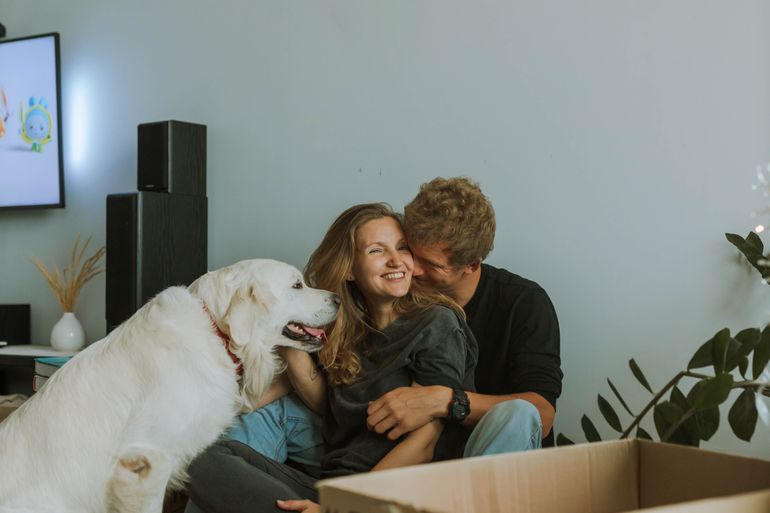
A dog who shared every couch cushion in the old apartment may suddenly growl when someone walks past the new bedroom. Owners often notice this change in the first weeks after a relocation, while boxes still line the hallway. Understanding why a dog may start guarding certain areas after moving into a new home helps you respond with patience instead of frustration. In most cases, the behavior reflects stress and uncertainty, not a sudden personality change. With a calm plan, most dogs relax once the new place starts to feel predictable.
What Does Area Guarding Look Like After a Move?
Area guarding is a form of resource guarding in which a dog defends a place rather than an object. After a move, the protected spot is often a new bed, a sunny window, the crate, or the hallway near the front door. Common signs include:
- Stiffening or freezing when someone approaches
- Growling from a favorite resting spot
- Blocking a doorway with the body
- Staring hard at people or other pets
- Snapping when asked to leave the furniture
Many owners first spot these signals at night or when guests arrive. A growl is useful information, so try not to punish it. A dog who learns that warnings bring trouble may skip the warning next time and bite instead.
Why Does a Dog Start Guarding Certain Areas After Moving Into a New Home?
Most dogs start guarding after a move because they have lost the familiar structure that made them feel safe. Everything in the new home smells, sounds, and looks different. Your dog cannot yet predict who will enter a room or what will happen there. Claiming one small area gives an anxious animal a sense of control in an unfamiliar world.
Scent plays a big role in this reaction. The old bed carried months of familiar smells, while the new rooms hold traces of previous owners, cleaning products, and possibly other pets. Territorial tension tends to grow when general anxiety stays high. Reducing that overall stress can also make territorial behavior less intense, which is why the same ways to calm an anxious dog while moving to a new place can be useful when guarding appears after relocation. Long travel days, missed walks, and irregular meals add further strain.
Are Some Dogs More Likely to Guard After a Move?
Yes, a dog’s history and temperament shape how strongly it reacts to a new home. Rescue dogs that once competed for food or shelter may fall back on old survival habits when life feels uncertain. Senior dogs often struggle with change because fading senses and stiff joints make new layouts harder to navigate. Herding and guardian breeds may also show stronger territorial instincts once they decide a room belongs to them.
Puppies usually adapt faster, but they can still pick up guarding habits during a chaotic move. A young dog that someone repeatedly startles on its bed may learn that the bed needs defending. Gentle, positive handling around resting spots keeps that lesson from sticking.
How Does Preparation Before the Move Affect Guarding?
Careful preparation usually lowers the amount of tension a dog carries into the new home. If you are traveling a long distance, a little preparation can make a stress-free relocation with your pup much easier, from planning regular rest stops to keeping familiar bedding close throughout the trip. Dogs that travel with their own bedding and a steady feeding schedule tend to settle faster after arrival. Updated ID tags and a secure leash also prevent frightening escapes in unfamiliar streets.
Arrival day matters just as much as the trip. Set up your dog’s bed, bowls, and toys before letting the dog explore freely. A dog who gets a clear, comfortable zone right away has less reason to claim a random corner, the couch, or your bed.
How Can You Help Your Dog Feel Secure Again?
The most effective approach combines a predictable routine, a dedicated resting area, and positive experiences with people nearby. Feed, walk, and play at the same times each day, even while you are still unpacking. Giving your dog a quiet area of its own is also one of the simplest ways to help your dog adjust to your new home, especially during the first few days when the rest of the space still feels unfamiliar. These habits build trust over time:
- Toss a treat near your dog each time you pass the guarded spot
- Trade your dog off the furniture with a treat instead of pulling
- Block access to high-conflict spots with a gate or closed door
- Reward calm behavior when family members walk by
Avoid scolding or physical corrections. Harsh reactions raise anxiety and usually make guarding worse.
What Mistakes Can Make Guarding Worse?
The biggest mistake is treating guarding as disobedience rather than fear. Pushing a dog off the couch, reaching into its crate, or staring it down all confirm the dog’s worry that people threaten its space. Each confrontation raises the stakes for the next one. Common missteps include:
- Pulling the dog off a spot by the collar
- Punishing growls or lip lifts
- Letting children approach a resting dog
- Rearranging the dog’s area every few days
Constant changes to the dog’s zone undo the stability you are trying to build. Once you choose a spot for the bed, leave it there so your dog can count on it. Consistency from every family member matters too, because mixed signals keep a nervous dog guessing.
Which Areas Do Dogs Guard Most Often?
Resting places top the list for most dogs. Beds, crates, and other favorite resting places can all become guarded resources.Beds, crates, and other favorite resting places can all become guarded resources. The ASPCA discusses this type of behavior in its overview of aggression in dogs, including situations in which dogs become protective of particular resting spots. Doorways and narrow hallways come next, especially in city apartments where dogs hear neighbors in the stairwell. Feeding areas can also become tense when a small kitchen forces people to walk close to the bowl.
Placement makes a real difference here. Put the bed and bowls in low-traffic corners, away from main walkways. A crate sitting in a busy path can easily turn into a guard post, so move it somewhere calmer. A dog who never feels crowded has fewer reasons to defend a spot.
Does Guarding Change in a Home With Other Pets?
Guarding often becomes more visible when several pets share a new space. Animals that coexisted peacefully in the old home may suddenly compete for the best window, the warmest bed, or the spot closest to you. A move resets the unspoken rules, so pets need to sort out their relationships again.
Give each pet its own bed, bowl, and resting zone, ideally in separate rooms at first. Feed animals apart and pick up any toys that spark tension. Short, supervised sessions together, with plenty of rewards for relaxed body language, help rebuild a peaceful household. Cats need high perches and escape routes so they never feel cornered by a guarding dog.
What If Your Dog Reacts to Visitors and New Sounds?
Dogs that guard indoor spaces often react more strongly to unfamiliar noises after a move. Elevators, buzzers, delivery drivers, and barking neighbors can all feel like intrusions in a home the dog does not yet trust. These unfamiliar sounds can be especially difficult for anyone moving with a reactive dog, so keeping the first few weeks quiet and introducing visitors gradually can help prevent the dog from becoming overwhelmed. A quiet retreat away from the front door and a white noise machine also soften hallway sounds. Short, upbeat greetings teach your dog that visitors bring good things.
Visitors should ignore the dog at first and let it approach on its own terms. Ask guests to toss a treat rather than reach for a head pat, and keep the dog’s resting area off limits during gatherings. These small rules protect both your dog and your guests while trust develops in the new space.
How Long Does Guarding Usually Last After a Move?
Mild guarding often fades within a few weeks, once routines settle and the new home starts to smell familiar. Anxious or older dogs may need several months before they fully relax. Progress rarely moves in a straight line, so expect small setbacks after busy days, loud neighbors, or overnight guests.
Track small wins rather than waiting for the behavior to vanish overnight. A dog that lets you walk past its bed without stiffening is making real progress. Mark those moments with a treat or a calm word, and gradually raise the challenge by walking a little closer each time.
When Should You Talk to a Professional?
Get professional help if guarding includes snapping, biting, or growing intensity after the first month. Ask your veterinarian to rule out pain first, since a dog with sore joints may guard a soft bed because moving hurts. If the behavior is becoming more intense or there is a risk of biting, specialist support may be appropriate. The American College of Veterinary Behaviorists explains what a veterinary behaviorist does and how this type of professional can help with more complex behavior problems. A trainer who uses humane, reward-based methods can help with milder cases. Keep a short log of each incident, including the time, place, and people involved, because clear patterns help professionals spot triggers faster.
Early help is often easier and cheaper than fixing an ingrained habit later. Many behavior professionals offer virtual consultations, which suit owners still unpacking after a long-distance move. A single session can give you a clear plan and the confidence to follow it.
Turning a New House Into Shared Territory
Knowing why a dog may start guarding certain areas after moving into a new home turns a worrying behavior into a solvable problem. Most dogs guard because they feel unsure, and security grows through routine, patience, and a space of their own. Watch the warning signs, reward calm moments, and bring in a professional if tension escalates. If you have recently relocated, start tonight by setting up a quiet corner that belongs only to your dog.


